
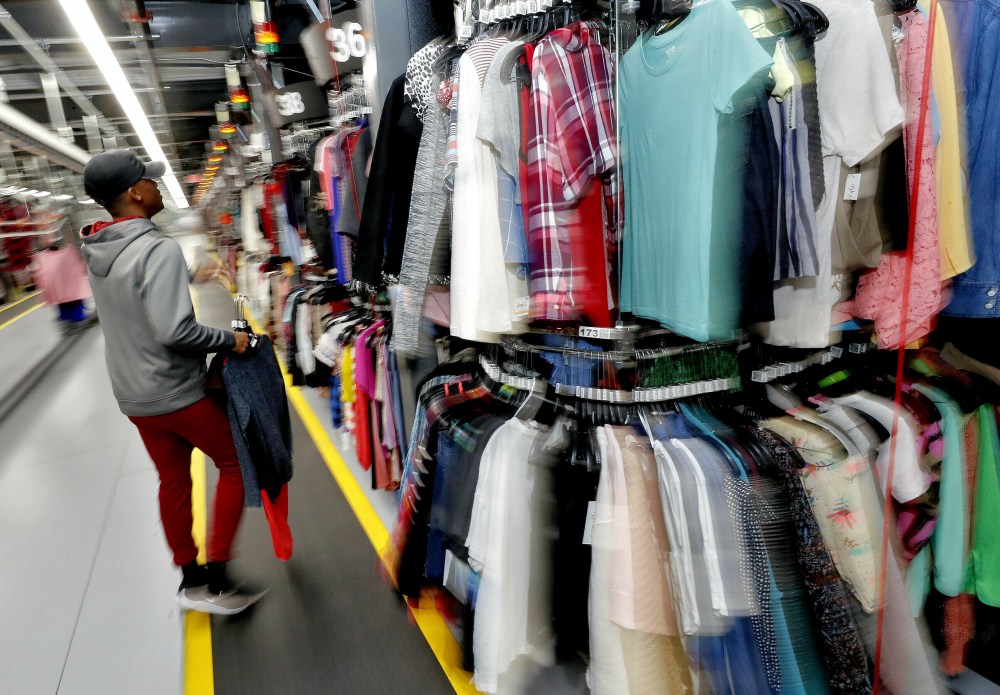
The holidays are over. You ordered a few things with gift certificates that don’t quite fit, or you were gifted items you want to return. It’s free. You have the receipt. The color of the sweater isn’t what you thought it was, so you printed the free return label, dropped the package at UPS and felt virtuous knowing it would find its way to someone else’s closet. Except it probably won’t. That perfectly good sweater has a decent chance of ending up in a landfill — not because anything’s wrong with it, but because it costs more to process than it’s worth.
According to Optoro, a leading returns technology company, American retailers sent an estimated 9.5 billion pounds of returned merchandise to landfills in 2022. That’s the weight of roughly 10,000 fully loaded Boeing 747s — buried in the ground because the economics of reselling them don’t add up.
This week’s column asks you to develop one powerful online shopping habit: Before clicking “add to cart,” pause and ask yourself, “Am I sure I will keep this?”
What the return label doesn’t tell you
The National Retail Federation reports that Americans returned $743 billion worth of merchandise in 2023 — roughly equal to Switzerland’s entire GDP. But here’s what that cheerful “free returns!” promise obscures: Only about half of returned items ever make it back to store shelves at full price.
Processing a single return can cost retailers between $10 and $40 per item. For a $25 shirt, the math is brutal: Paying for return shipping, warehouse labor, inspection and repackaging often exceeds any profit the item might generate. So companies make a perverse calculation — it’s cheaper to destroy perfectly good merchandise than to resell it.
The environmental toll extends beyond the landfill. Every return journey doubles the pollution profile of a purchase. A dress shipped from Kentucky to Maine, then returned to Nevada, has traveled thousands of miles in diesel-burning trucks — only to potentially end up as waste. Optoro estimates that U.S. returns generate approximately 24 million metric tons of carbon dioxide emissions annually, equivalent to the yearly emissions from about 5 million cars.
The bracketing epidemic
Retailers have a name for the practice of ordering multiple sizes or colors with the intention of returning most of them: bracketing. According to Narvar’s 2022 State of Returns study, 63% of American consumers now bracket at least some purchases.
Free returns policies have inadvertently created a system where overconsumption is built into the buying process. If you order three sizes of jeans and return two, you haven’t made one purchase — you’ve likely made three purchases and thrown two away.
The 60-second pause
Before your next online purchase, pause at the checkout screen. Take 60 seconds to ask three questions:
Do I know if this will fit? Have you checked the size guide or read reviews from people with similar body types? Most fit problems stem from skipping this step. Spending two minutes with a tape measure before ordering can prevent a return — and keep a garment out of a landfill.
Am I certain I want it? If you’re already considering which items you’ll return, that’s a signal to close the tab. The mental math of “I’ll just try it and see” is the beginning of the waste stream.
Would I buy this if returns weren’t free? This question cuts through the fog of convenience. Free returns make every purchase feel reversible, but the environmental cost of that reversal is very real.
If the answer to any of these is “no,” step away and count a win for sustainability.
Beyond the pause
When you buy online, a few strategies can further reduce your return footprint. Choose retailers that invest in accurate sizing technology — companies like Nordstrom and True Fit have built systems to help customers get it right the first time. If you must return something, return it in person when possible to eliminate return shipping emissions. And if you receive a “keep it” offer with your refund, take it so you can donate the item locally.
Consider also the fundamental question of whether you need new goods at all. Platforms like ThredUp, Poshmark and eBay extend product lifecycles. When secondhand purchases don’t work out, you can resell them through the same channels rather than returning them to an algorithmic quagmire.
The gift of certainty
Shopping more deliberately isn’t just good for the planet, it saves you money and time. Research in consumer psychology suggests that people who commit fully to purchases report higher satisfaction than those who rely on the return safety net.
That 60-second pause at the checkout screen — that tiny interruption in the frictionless flow of e-commerce — is a powerful habit. The planet, and your future self, will thank you for developing it.
Join Fred, Peggy and the Brunswick area community at the 2026 Earth Day Festival in Brunswick on Saturday, April 25, from 10 a.m. to 3 p.m. at Harriet Beecher Stowe Elementary School. Enjoy a festival of fun, learning and positive action to celebrate Earth. Dress up as your favorite creature or come just as you are, but don’t miss it! For more information, go to earthdayinbrunswick.com.
Fred Horch and Peggy Siegle are principals of Sustainable Practice. To receive expert action guides to help your household and organizations become superbly sustainable, visit SustainablePractice.Life and subscribe to One Step This Week.

The Times Record Sustaining Sponsor
We believe a community must be informed to thrive. bowdoin.edu
Comments are not available on this story. Read more about why we allow commenting on some stories and not on others.
We believe it's important to offer commenting on certain stories as a benefit to our readers. At its best, our comments sections can be a productive platform for readers to engage with our journalism, offer thoughts on coverage and issues, and drive conversation in a respectful, solutions-based way. It's a form of open discourse that can be useful to our community, public officials, journalists and others.
We do not enable comments on everything — exceptions include most crime stories, and coverage involving personal tragedy or sensitive issues that invite personal attacks instead of thoughtful discussion.
You can read more here about our commenting policy and terms of use. More information is also found on our FAQs.
Show less