
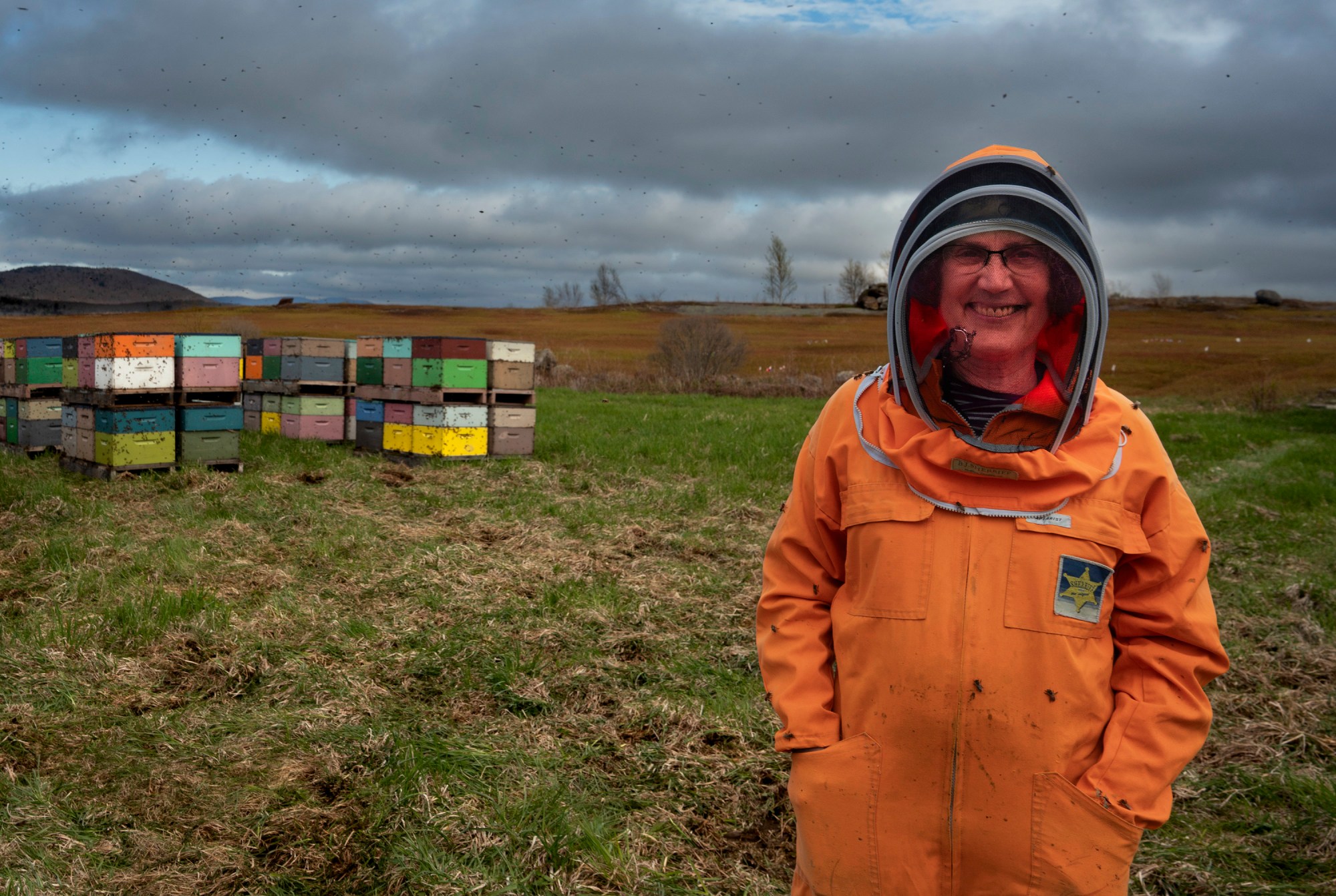
A few years ago, I found the diary I wrote while on a family trip to Alaska in 1970. I was 9 years old, making me just two years younger than the state itself.
The six-week trip from Philadelphia, my hometown, involved a plane ride (my first!), overnight trains, a camper, a ship, two national parks, the as-yet-unpaved Yukon highway, glaciers, a couple of black bears, my parents and us four Grodinsky girls, ages 9 to 14. My father insisted we all write daily diaries. When I rediscovered mine — I thought it had vanished decades ago — I was over the moon.
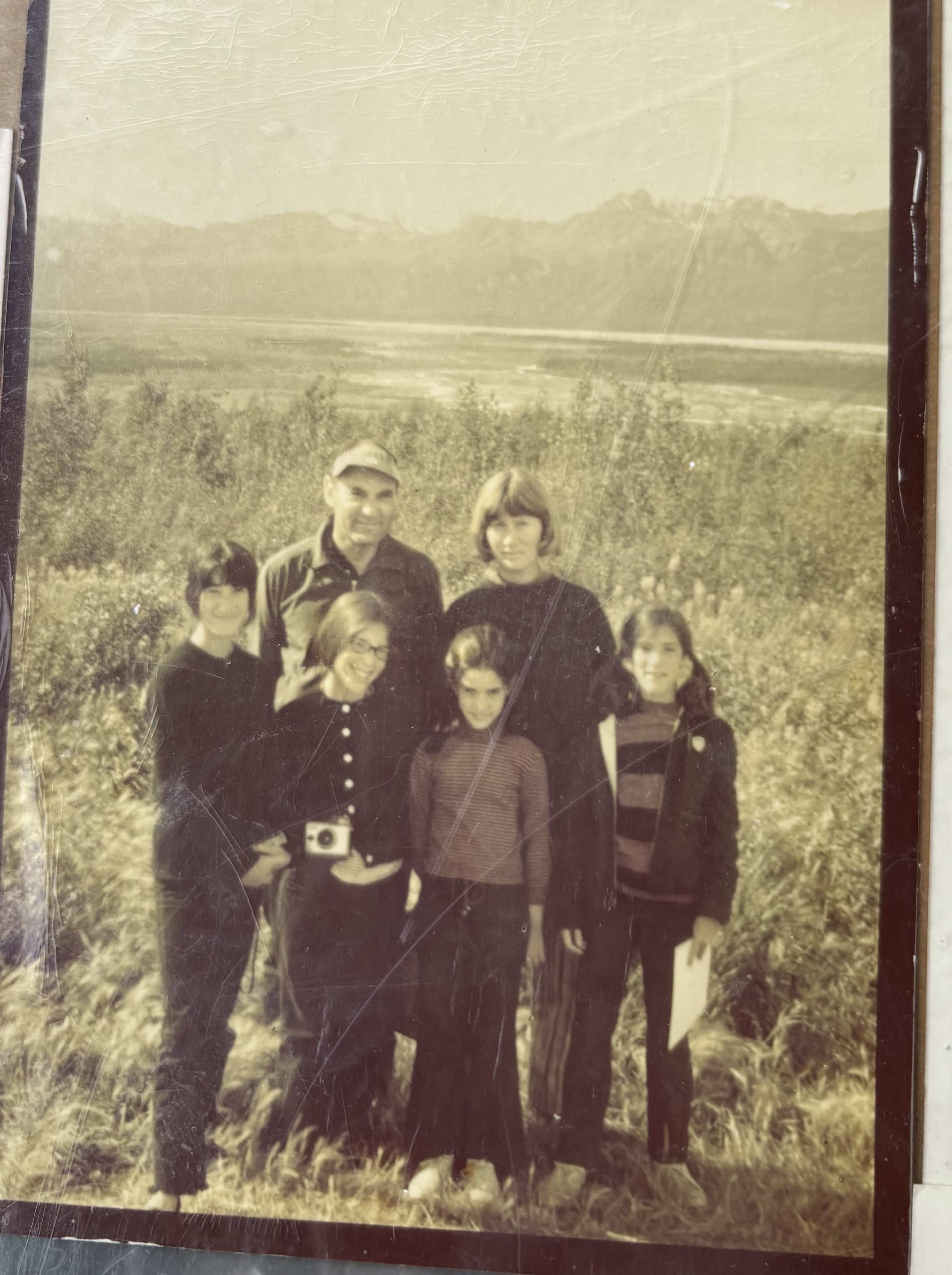
Reading it more than 50 years later, I was struck by the number of times I talked about what I was eating, from “breckfast” straight through to “desert.” Here is a very partial list: A lunch, “wich is a hamberger”; another lunch involving two “pices of cheses”; a strawberry “sunday. It was GREAT!; a “carmel” apple; “speghetti” and meatballs; a “supepe” (supper?) about which I commented, “it was yummy.”
Much else was “dilishes.” Also, to this day I remain an inadequate speller.
When did I become a writer? When did I decide that what I wanted to write about was food? I’m feeling introspective — or possibly I’m navel-gazing — because after 12½ years at the Portland Press Herald, this week I am retiring. Typing those words still feels like an out-of-body experience.
To go back to the beginning, I was born in 1961, the year Julia Child published Volume 1 of her masterpiece, “Mastering the Art of French Cooking.” It sparked a food revolution in America that I grew up with and that continues to reverberate today.
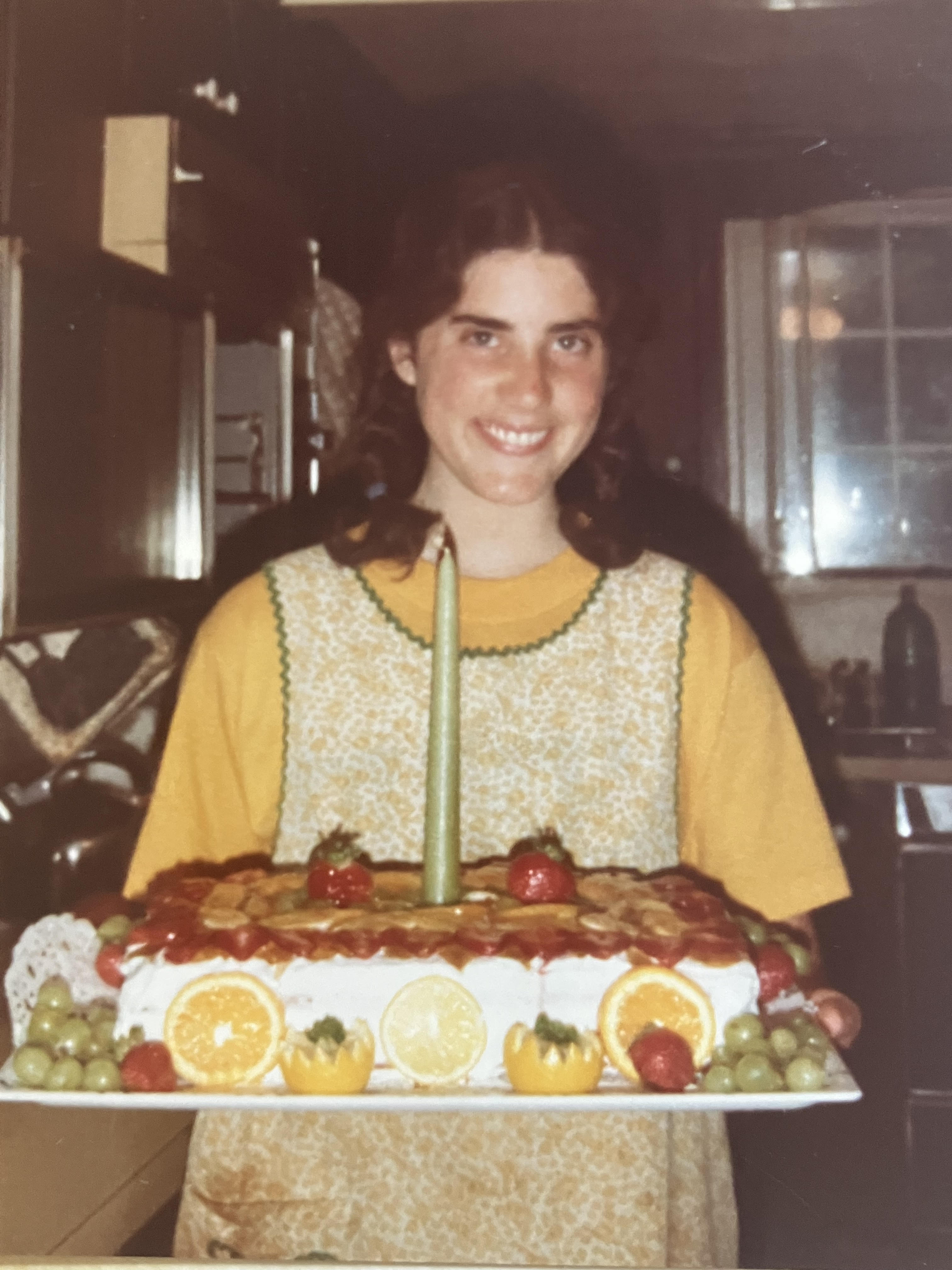
To briefly recap my own life in food: I worked in bakeries and restaurants through high school, college and for a couple years after, including spending a summer as “pastry chef” — much too elevated a title, I realize now — at Linekin Bay Resort in Boothbay Harbor.
I dreamt of running a bakery. I dreamt of running a diner. In college, I did run my own restaurant for a month as a winter term project. A blast, but I’m pretty sure my culinary ambitions exceeded my execution.
My background wouldn’t impress anybody now. Who isn’t a foodie? But most of my young life in food occurred before the James Beard Foundation (where I would one day work); before the Zagat restaurant guide, the Food Network, Iron Chef, the Anthony Bourdain phenom, bloggers, Foodstagram, influencers, viral recipes, #foodTok and whatever is around the bend.
Eventually, I wrote and edited stories and other content about food for a cooking school in Manhattan, the Beard Foundation, the Houston Chronicle, and Cook’s Country magazine, before arriving at the Press Herald in 2014.
I dislike the word “foodie,” incidentally. And don’t get me started on “sammie.” What is it about our need to infantilize food words? I bring these up by way of saying that the other half of writing about food is, of course, writing. I cannot remember a time I did not love to read, and I cannot remember a time I did not write.
It has been a privilege to write for you. Just as food connects us over the table, I’ve found it bonds us through words in the paper, too. Thanks especially to readers who’ve taken the time to write me with feedback, good and bad.
It has been a privilege to edit, and work with, my talented colleagues. I also feel lucky to have come to know some of Maine’s cooks, chefs, bakers, restaurateurs, producers, farmers, cookbook writers and eaters, and I am deeply grateful for their willingness to share their time, experience, stories and “dilishes” food. Even now, I pinch myself sometimes, amazed I am paid to write about food.
I have long joked that my tombstone will be a to-do list: Dishes I never found time to cook, books I never got to read, places I never got see, weeds I never pulled, thank-you notes I never wrote, dinner invitations I never returned, chores I never got to. Maybe now I’ll have the time.
Before I say goodbye, though, a quick lightning round of, er, me interviewing myself.
What is your favorite restaurant in Portland?
I get this question a lot, and I suspect my answer disappoints a lot. I don’t have one. It depends on my mood, the season, the weather, the occasion, my stomach capacity that day, the people I’m eating with. Context may not be everything when it comes to eating out, but it’s a lot.
What do you wish someone would ask you that they never do?
I’d like to be asked about writing, anything at all about writing. I am a writer first, a food writer second.
OK, then tell us some favorites of your own stories.
This one about bees, wild blueberries and pollination. This one about having to take down a beloved maple tree. This recent one about a micro-vineyard in Portland and this old one about figs growing in Scarborough. This column about aging parents. This one about the bond between a chef and his dishwasher. And this one about how Trump’s tariffs affect your own kitchen. But if you mean the people I interviewed who I enjoyed most, or the stories I had the most fun reporting, I’d have different, if overlapping, lists.
What stories do you regret not writing?
I hoped to write about Brother Arnold at Sabbathday Lake Shaker Village, and his love of cooking. Years ago, I spent the day with him to gather material, but when I sat at my keyboard, I froze. I almost never freeze when I write. If writer’s block were a repeat problem, I’d have needed to find another line of work. Fortunately, a year later, my colleague Gillian Graham wrote a lovely story about Brother Arnold baking for Christmas.
I also regret that I never was able to take then-Maine CDC director Dr. Nirav Shah out for hummus. He likes to cook and he’s a hummus fan, and I’d wanted to talk with him about this side of himself. (“One of the things I’ve learned about myself in 2020 is that there is no container of hummus so large that I will not buy it,” he once tweeted.) He agreed, but when the pandemic spiked again, he had more important things to do.
Have I mentioned Martha Stewart turned down my dinner invitation? In actual fact, she ignored it. I’d extended it through, er, her people, after reading a Parade cover story with Martha’s Quarantine Survival Guide. “She wishes people would…” the magazine asked, to which she answered “Cook for her.” She gets few invites to dinner when she’s spending time in Maine, she said. “That makes me a little sad.” Don’t be sad, Martha! I’ll cook for you! I also sent a handwritten invitation on a beautiful card (written with a fountain pen!) to her home in Seal Harbor — to no avail.
One story I never wrote as a very young reporter still pains me. I’d interviewed Freya Von Moltke, then living in Norwich, Vermont. She was the widow of Helmuth James Von Moltke, a German aristocrat who was put to death in 1945 by the Nazi regime. I have never, before or since, had a more profound, more moving, more inspiring conversation with anyone in my entire life. When I returned to the office to try to write it up, the tape was blank.
What do you look forward to in retirement?
Many things, including not always feeling rushed; spending lovely, fleeting summer days outside instead of at the keyboard; getting to use the Oxford comma (we don’t at the Press Herald); trying my hand at sourdough again; and getting dinner on the table before 8:30 p.m. — at least once in a while.
See you in the funny papers.
ALMOND-PEACH CAKE
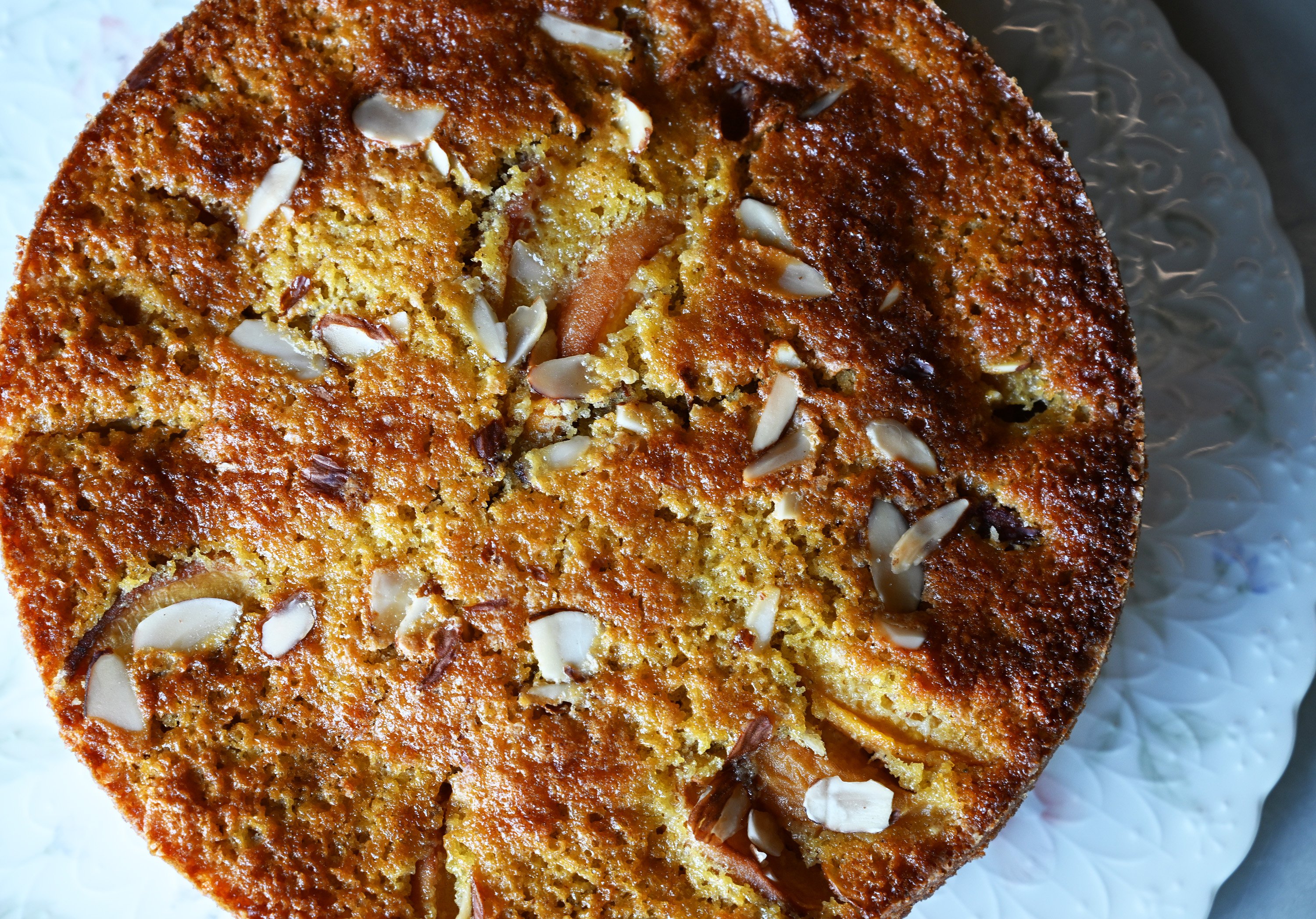
Help me celebrate my retirement by baking a cake. I am rich in peaches, as over the weekend my neighbor’s children gave me a big bag from their tree, which has been bending from the weight of so much fruit this summer.
Peaches are “from away,” like I am, but they have been finding a home in Maine in recent years, as I have. I found this recipe in “Full Moon Suppers at Salt Water Farm” by Annmarie Ahearn; I’ve modified it very slightly. Because the batter is thin, alas, the peaches sink as the cake bakes; next time, I might use fewer peaches, simply chop them and gently stir them into the batter. Ahearn says you can swap cream for the milk for a richer crumb.
Serves 8
3/4 cup all-purpose flour
1/4 cup white whole-wheat flour
1/2 cup almond flour
2 teaspoons baking powder
1/2 to 3/4 teaspoon ground cardamom
1/2 teaspoon salt
9 tablespoons unsoftened butter, at room temperature
1 cup sugar
3 eggs
1 teaspoon vanilla extract
3/4 cup milk
4 to 8 peaches, depending on their size, sliced about 1/4-inch thick, no need to peel
About 1 tablespoon turbinado sugar
Smattering of sliced almonds
Grease a deep 8-inch pan (or springform pan) with butter and line it with parchment paper. Preheat the oven to 350 degrees F.
Whisk together the flours, baking powder, cardamom and salt. Cream the butter and sugar in a stand mixer until light and fluffy. Add the eggs one at a time. Beat in the extract. Add the combined dry ingredients in thirds alternatively with the milk, beginning and ending with the dry ingredients. Take care not to overmix or the cake will be tough.
Pour the batter into the prepared cake pan. Top with the sliced peaches in a pretty pattern. The batter is on the thin side so place the peaches gently. Sprinkle the top of the cake with the turbinado sugar and the sliced almonds. Bake for 55 minutes to 1 hour until golden brown and a toothpick inserted in the center emerges with just a few crumbs clinging to it.
Cool 15 minutes in the pan, then unmold to finish cooling, peach side up, on a cooling rack.
We invite you to add your comments. We encourage a thoughtful exchange of ideas and information on this website. By joining the conversation, you are agreeing to our commenting policy and terms of use. More information is found on our FAQs. You can update your screen name on the member's center.
Comments are managed by our staff during regular business hours Monday through Friday as well as limited hours on Saturday and Sunday. Comments held for moderation outside of those hours may take longer to approve.
Join the Conversation
Please sign into your Press Herald account to participate in conversations below. If you do not have an account, you can subscribe here. Questions? Please see our FAQs.