
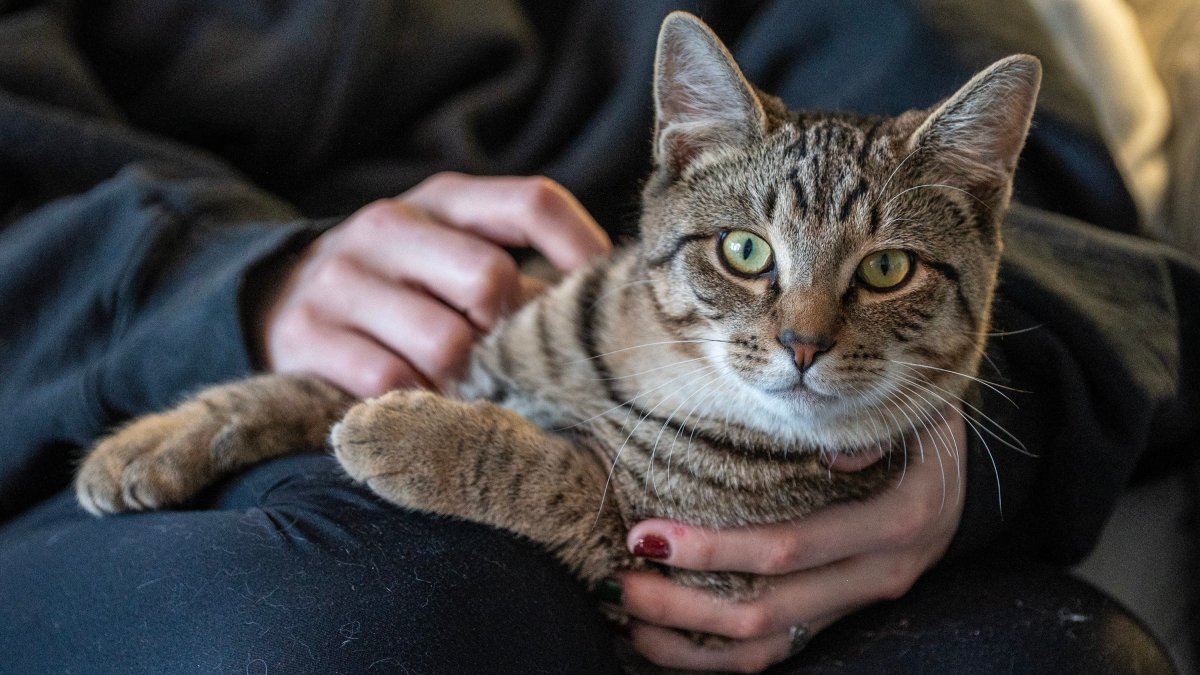
I recently had a challenging conversation with a community member that highlighted one of the most persistent issues in animal welfare: the debate on whether cats should be allowed outside, or not.
She was very upset that a cat adopted from Midcoast Humane was spending time outside in her neighborhood. A staunch cat person, she was very concerned that he would be harmed by being outside and worried about him crossing roads and getting hit by a car. She also felt that he seemed hungry, always eating when she or her neighbors offered him food.
I understood her perspective; I keep my own cats indoors. This works best for me and my family. There are others that feel just as strongly that keeping cats exclusively indoors is unfair to them and does not allow them to exercise their natural inclinations to roam and hunt, which bars significant enrichment from their lives.
We do not prohibit adopters from allowing cats outside in our adoption contract, which the concerned community member did not agree with. Our contract requires adopters to agree that, “I will not allow the pet to run at large, unless I have adopted a Midcoast designated Barn Buddy cat or a cat with a known outdoor history.” Many of the cats who come to us previously lived as indoor/outdoor cats. Whether a cat who is used to going outside can transition into an exclusively indoor cat depends largely on the adopter’s commitment to provide stimulation and enrichment as well as the personality of the individual cat. I have seen these transitions work well and I have seen them fail.
There are benefits and detriments to both options. Indoor-only cats generally live longer lives, but also suffer from higher incidences of obesity, due to their more sedentary life. Outdoor cats run the risk of encountering wildlife that can harm them, being hit by cars and contracting diseases and parasites. While an outdoor cat is at higher risk of being taken in by a well-meaning Good Samaritan or brought to a shelter, they are also more likely to find their way home. Many indoor cats do not have the skills to survive if they get outside.
Whichever side of this issue you fall on, there are real-world implications to a shelter choosing to enforce indoor-only policies, chief among them is incentivizing adopters to be dishonest during
counseling. Our goal is to make good matches and set both adopters and pets up for success; this is very hard to do if adopters are dishonest about how they want to live with their pets. It is far better for us to have honest, realistic conversations with adopters and pair them with a cat who can live successfully with them. I would much rather pair someone who wants a cat that goes outside with a cat who has been outside before than have an adopter blindly pick a cat they like and then let her outside without any outdoor experience.
Conversely, pairing an adopter who wants an exclusively indoor cat with a cat used to going outside (without making sure they understand the challenges and possible failure of acclimating him to be indoor only) is unfair to both the adopter and the cat.
An NIH study 1 showed that the more rural the area, the more likely it is for pet guardians to let their cats outside, and the opposite is true for urban areas. If there’s one thing we have plenty of here in Maine, it’s rural space and letting cats outside is common for many residents. An indoor
only policy could limit adoptions for cats who would thrive in those homes.
The community member and I were not able to come to a consensus on the issue that satisfied her. She wanted us to tell the owner of the cat she was concerned about that he needed to stay indoors. I declined to do so, explaining our reasoning for allowing indoor/outdoor cat adoptions.
In response, she accused us of having no compassion for cats and compared us unfavorably to
a shelter in the state she used to live in who had a mandatory indoor only policy. That was hard
for me because what I saw was a lack of flexibility on her part to understand that other people
see issues differently than she does. To have that called a lack of compassion on my part felt
unjust. Some cats do very well when no longer allowed outside, but many do not. I have seen
outdoor cats become depressed when confined, and I have talked to many adopters whose formerly outdoor cats became “door dashers” when kept inside. I have compassion for all sides of the issue, including the cats suffering when not allowed outside.
I explained that a fundamental principle of our adoption counseling is recognizing that what works for one home may not work for another without either being “wrong.” People have different lifestyles and preferences. Regional norms, such as allowing cats outdoors, vary widely; while this practice may not be common in the state she came from, it is normal across much of Maine. As an animal shelter serving Mainers and their pets, we have chosen to match the pets in our care with adopters’ preferences, and that includes allowing cats with outdoor experience to go to homes looking for them.
I have a couple of key takeaways from this experience. One, animal advocates are passionate! We are not all coming from the same perspective, but we all want the best for the animals. Second, some disagreements are not surmountable. It goes against my 25 years of customer service to have a patron leave unhappy, but in the immortal words of Ricky Nelson, “You can’t please everybody.”
Jess Townsend is executive director of Midcoast Humane.

The Times Record Sustaining Sponsor
We believe a community must be informed to thrive. bowdoin.edu
We invite you to add your comments. We encourage a thoughtful exchange of ideas and information on this website. By joining the conversation, you are agreeing to our commenting policy and terms of use. More information is found on our FAQs. You can update your screen name on the member's center.
Comments are managed by our staff during regular business hours Monday through Friday as well as limited hours on Saturday and Sunday. Comments held for moderation outside of those hours may take longer to approve.
Join the Conversation
Please sign into your Press Herald account to participate in conversations below. If you do not have an account, you can subscribe here. Questions? Please see our FAQs.