



As site plan details for the ConvenientMD urgent-care building in Westbrook are ironed out leading up to a scheduled public hearing March 1, the building’s proposed signage has left many on the Planning Board saying it’s too much.
The Planning Board public hearing will tackle a proposed amendment to the signage plan, which board members say is too overwhelming for an important city gateway.
However, officials from ConvenientMD have said that, due to the nature of their business, visibility is a major component in making sure potential patients know where they are. They have also said that adjustments are being made.
After reviewing the signage plans, which could put a 30-foot-long, lighted sign facing Gorham, board member Cory Fleming said she had “serious concerns” with the proposed size.
“We don’t need signage that large to attract people’s attention,” she said, during a workshop Feb. 2. “It’s not something I can support.”
City administration is characterizing the back-and-forth discussion as normal, with Bill Baker, assistant city administrator, saying that there is “strong community support” for the project.
Baker said the urgent-care office will take the parcel “from many years of slum and blight to jobs and services and an attractive use on a gateway lot.”
The site has received a higher level of scrutiny from Planning Board members due to its prominent location at the city’s western gateway, at 942 Main St. The triangular-shaped parcel sits facing the intersection of Route 25 to Gorham, William Clarke Drive and Main Street.
The Planning Board also opted to host a site walk Feb. 6, which was attended by all eight board members. Rene Daniel, the vice chairman of the board, said this week that the full attendance was unusual – a sign that interest in the project is high.
He said consensus among board members is the size and amount of signage is concerning. He said there are no other businesses downtown using that much signage.
Daniel said, in general, he has been careful with signage downtown, and that even when Disability RMS proposed its sign on One Riverfront Plaza, he was skeptical.
ConvenientMD, which operates a number of urgent-care and walk-in medical clinics in New Hampshire, would open its first clinic in Maine if the project is approved by the Planning Board. Officials from the company have also said they are planning clinics in Scarborough and Portland.
The company uses a quick-care model, which focuses on what it says is fast, efficient and cost-effective medical care. Since 2012, ConvenientMD has opened eight locations, including one in Nashua, N.H., in December 2015.
At the Feb. 2 workshop, ConvenientMD founder and CEO Max Puyanic said visibility is key for their business model.
“Keep in mind the nature of our business, and why it’s important for us to be very visible,” he said.
Puyanic said the most common patients come in for broken bones, sutures or injuries from other accidents. He said the company is expecting most customers to come from the west, traveling toward Portland.
Ben Collins, the executive director of ConvenientMD, said Tuesday that the company is working hard to address the Planning Board’s concerns.
“We are hopeful they will look favorably on our most recent application, which included modifications to our standard prototype building, in an effort to incorporate their feedback,” he said, adding that the company hopes the plans are approved at the next meeting.
“We will be a very active member of the community and we’re confident we’ll be a great resource to local residents,” he said.
The amendment sought by ConvenientMD would allow for a signage variation, where the proposed main entrance (facing Gorham), would be allowed a much larger sign than what is permitted. Signage is normally allocated based on the square-footage of the building wall. Although larger on one side, the total signage for the site would not exceed city regulations.
“That side of the building is important to us,” Puyanic said.
The property was once Yudy’s Tire Co. and Maine Rubber International, started by the late Julius “Yudy” Elowitch and his two brothers. After Maine Rubber relocated in 1998, the building was rented for storage. The building finally was demolished in August 2013, following lengthy wrangling between the city and the property owner, David Elowitch.
Environmental issues at the site and the high cost of demolition prohibited redevelopment for years. However, in late 2011, the city secured a $125,000 grant to help pay for the demolition, and negotiated with Elowitch and his company, Storage Realty, to move the work forward.
During discussions leading up to the building’s demolition, Westbrook officials argued that a more attractive use of the site would help the surrounding economy. When they learned of the ConvenientMD plans in December 2015, city officials praised the incoming business.
At the Feb. 2 workshop, Daniel asked planning officials how many downtown buildings have more than one sign. The ConvenientMD plan calls for four.
“We don’t have many that have this type of visibility,” said City Planner Jennie Franceschi.
The March 1 meeting, at 7 p.m., in Room 114 at Westbrook High School, will begin a busy few weeks for the Planning Board, which will also hold the first of two workshops on the 89-page Dirigo Plaza site plan. Franceschi said she had to split the workshop into two meetings due to the size of the plan, which calls for 500,000 square-feet of retail development.
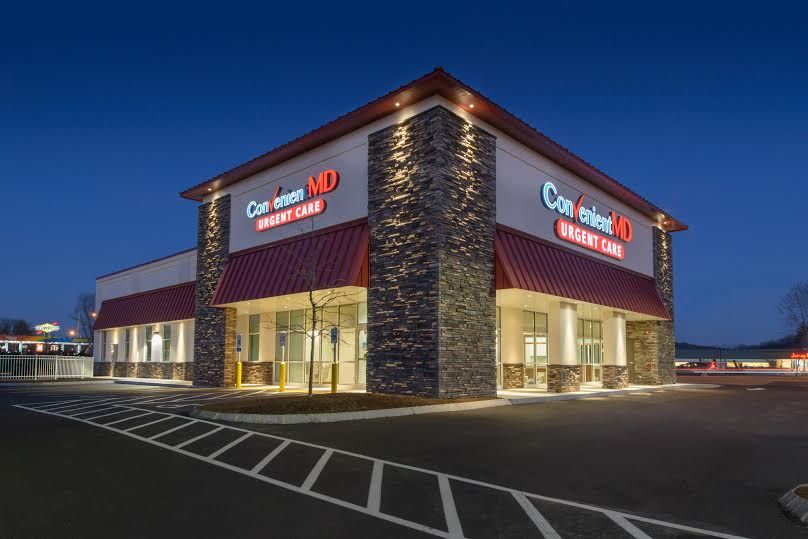 This photo of a recently constructed ConvenientMD location in New Hampshire depicts the general size and amount of signage used by the urgent-care company.
 Send questions/comments to the editors.
