




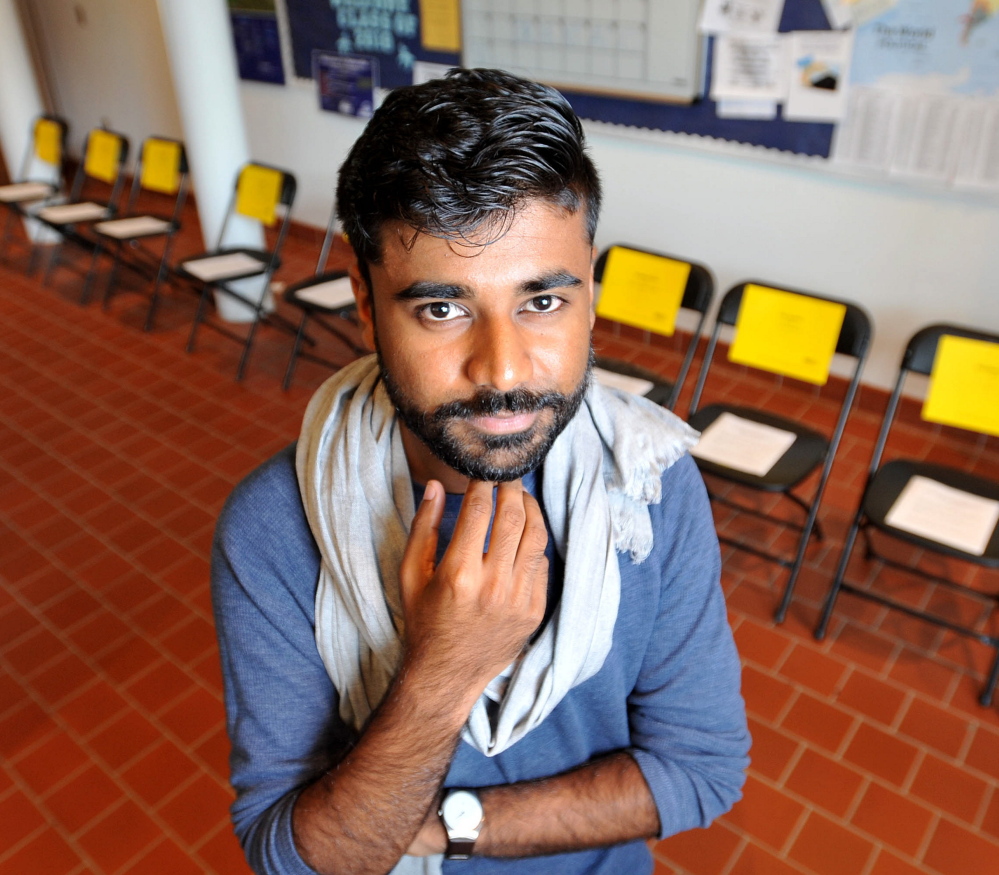
WATERVILLE — On a trip to Ferguson, Missouri, during protests that followed this summer’s shooting of an unarmed black man by a white police officer, a 21-year-old Colby College student was forced to seek protection in a designated media area when tear gas was shot into the crowd.
Earlier that night, Aquib Yacoob and others in a delegation from Amnesty International stuffed wet napkins into their ears to protect themselves from a sonic weapon that police were using to control hundreds of people gathered to protest the shooting of 19-year-old Michael Brown by police officer Darren Wilson.
Additional Images
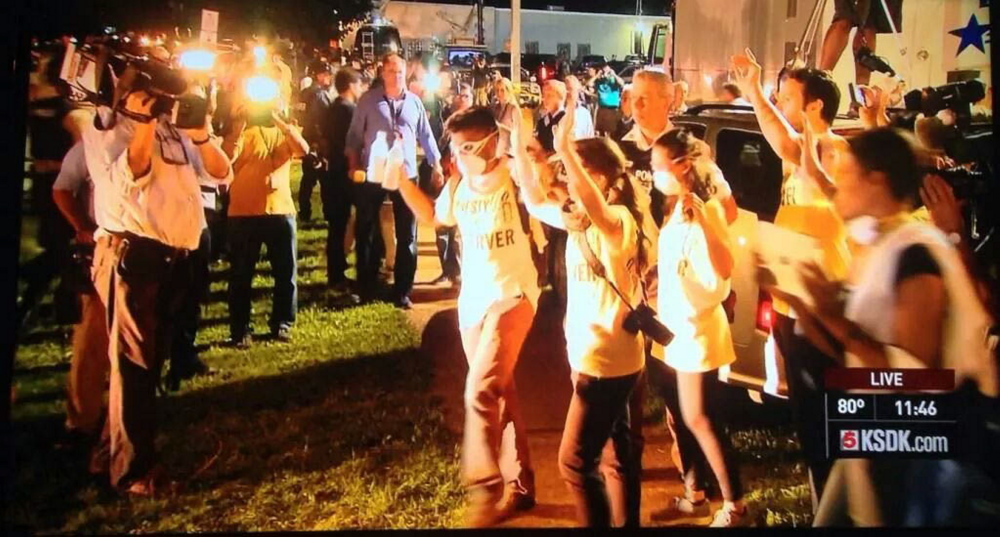
“It was one of the more intense nights of interactions between protesters and the police,” Yacoob said in an interview. “The National Guard was called in at that point, and it was the first night of the Guard on the ground.”
The observations of Yacoob and others who made the trip will be included in a report that will also carry recommendations on how to remedy human rights abuses, according to Jiva Manske, deputy director of membership mobilization for Amnesty International.
Yacoob, a Colby senior, is also taking other steps to address issues surrounding the shooting.
On Thursday, Dante Barry, the director of the Philadelphia-based group Million Hoodies Movement for Justice, will speak at 7 p.m. at Colby on the topic “Beyond Ferguson: Discrimination, Gun Violence and the Legacy of Mike Brown.” The talk is free and open to the public.
The event is part of an effort to address the shooting and some of the questions it raises, said Yacoob, who met Barry through his work with Amnesty International, where preventing gun violence has been a focus of Yacoob’s work. Barry is one of several activists Yacoob saw arriving in Ferguson in the aftermath of the shooting and represents a group that was founded in the aftermath of the shooting of Trayvon Martin, an unarmed black teenager who was killed in 2012 by a member of a community watch organization in Sanford, Florida.
“Ferguson is a key point in a movement that is building in the United States,” said Yacoob. “There is momentum around police violence, around gun violence, around discrimination and policy. How do we move beyond Ferguson? What is the next step? Not that we’re just left paralyzed by this crisis that happened because it’s not just a one-time event.”
While in Ferguson, Yacoob paired off with another member of the 12-person delegation to observe the protests, which Amnesty International had been invited to do by community members there. Amnesty International promotes human rights and is active in global campaigns against injustice.
At about 9 p.m. Yacoob arrived on the strip in Ferguson, and as the night wore on, police began asking protesters to leave, he said. Sirens went off and police announced that tear gas would be used, said Yacoob.
“All the protests I saw throughout this entire process were fairly peaceful. They were peaceful assemblies of individuals,” said Yacoob. “When the tear gassing happened it was later on in the night. I forget the exact time, but the police had asked folks to leave the space and people from the community were staying.”
When he heard the announcements, Yacoob and a colleague began moving toward a designated media area. But it wasn’t enough to escape the windblown gas, and it sprayed on their skin.
“Tear gas is not a joke. It doesn’t make you cry as commonly perceived,” he said. “It burns you and it pains you for a really long time.”
EXPERIENCED ACTIVIST
Yacoob became involved with Amnesty International while a high school student in Queens, New York, and in January received its Ladis Kristof Memorial Fellowship for Organizing and Activism, which allowed him to travel with the group to United Nations hearings in Switzerland this summer and to Ferguson to assist with training in nonviolent action and de-escalation.
He was also there to collect observations for a report Amnesty International is preparing calling for an investigation into allegations of human rights abuses in Ferguson.
On Aug. 9, Brown was killed after Wilson shot him six times in the St. Louis suburb. The circumstances surrounding the shooting are in dispute and have sparked debate across the country over gun violence, discrimination and police actions.
“Aquib has been a very engaged youth leader within our movement over the last several years,” said Manske. “When Mike Brown was shot, and later when the protests started, it made sense to start a delegation and to have Aquib be a part of it as a representative of the broader youth movement.”
The issue is also personal for Yacoob, born in the South American country of Guyana.
In a Maine Compass column published by the Morning Sentinel and Kennebec Journal, he wrote, “This will be my third year living in Waterville. It scares me that so many people don’t think race matters when it comes to violence, that so many think we live in a color-blind society.
“I am a man of color. Race matters.”
Send questions/comments to the editors.
