



FREEPORT – Freeport’s Tom Acousti covers soup to nuts, pretty much, in the music business. He’s a songwriter, performer, teacher and even a producer. He also spent a couple years managing the Freeport Performing Arts Center.
He grew up on Cape Cod and, as an adult, has lived in New York, Nashville, Los Angeles – and the road. His life has been about music. “To me, the word ‘Freeport’ means harbor and freedom,” he said. “Kind of like roots and wings.”
About six years ago, Acousti “fell completely in love” with Freeport resident Diane McLellan, who teaches elementary school.
“It’s all in the songs,” he said. “Diane also sings with me now and has adopted the songs like children. Shortly, we’ll be bringing her education and literacy expertise together with my skills to offer a writing workshop for kids called ‘Story to Song.’”
Acousti has two children. His son, Camden, is just about to turn 14 and his daughter, Shiloh, will graduate from Emerson College next year.
Acousti spent some time recently talking about his background and his work.
Q: You’re a songwriter, performer, teacher and producer. That’s quite a job description. Could you explain how you apply all these skills, and how much time you spend on each?
A: If I can facilitate a process in which others find their true voices and learn more about who they really are, I’m there. This can take the form of producing another artist, creating a song with a classroom, or coaching a songwriter – it’s all good. Necessity is a good motivator to try many different things and gain new skills. I’ve had a lot of that along the way. But I’m in my highest and best purpose when I’m writing, producing, and performing in my own voice. It took me a while to learn that I have to follow that passion no matter what. Life tends to be a slave to that idea and I’m OK with that. Recently, I’ve spent a good deal of time setting up a delivery system to get music to anyone for free on an ongoing basis. We call this, “One Song at a Time” – it’s at the website.
Q: How would you define “songcraft?”
A: Imagine hitting a tennis ball back and forth with someone you love, cooperatively rather than competitively. So you are not trying to get it past them. But you do want them to be engaged and get some exercise. Good songcraft is like that. It creates a conversation. It might feel good to just whack a tennis ball into the woods but I wouldn’t ask anyone to pay to watch me do it for an hour and a half. Studying songcraft is an endless practice. It encompasses everything you could ever learn about how to create a piece that is actually going to be received and “work” for the listener. It’s a lot of technical stuff, but at a world-class level, it has to include the study of self, awareness, and what it is to be human. All good art-craft disciplines are like this.
Q: You’re compared to Jackson Browne and Cat Stevens. Can you tell us why? Is it voice, style or a little bit of both?
A: I’m pretty comfortable with those comparisons because they, and so many like them, were strong influences. I think my voice does point people to Cat Stevens in a somewhat specific way. Style? Not really sure because my own style changes a lot from song to song. There was a short time after the Beatles but before video robbed the “song” of center stage that a crop of writer/artists were willing to expose themselves and write about life-themes in a certain brave way. They assumed the audience was really smart and willing to dig deep with them. That’s what I studied and learned to do. In that way, I never changed with the times and I’m proud of that. I hope that the comparisons are a recognition of that.
Q: Where do you usually perform? How often do you do shows locally?
A: It comes and goes and the performances can be very different from each other. I did a one-set concert at the Chocolate Church Arts Center in Bath recently that was a solo, story-based, almost sacred kind of night. But just prior to that in December, we did a three-set all-nighter with a full band at the Mediterranean Grill here in Freeport that was packed, loud, and fun. I’m also playing in New York City again and work with a different set of players who are based there. We recently recorded a concert performed in a New York City theater and you can hear clips of that online. We’re recording most shows and will be releasing live recordings online for free frequently. So, performances are not too frequent but always really fun. It’s tough on the wallet but way more satisfying than just touring. Currently, I’m working on a new hybrid show -– an interactive concert of sorts that will be really innovative and unique. We’re testing this with some invite-only shows. I also love performing for progressive church congregations. I was music director at Maine Beacon for Spiritual Living for a couple of years and, during that time, wrote an entire catalog of evocative songs that work well in sacred spaces.
Q: You co-produced, edited, and provided music for the feature documentary film, “One Tuesday Morning,” which was seen on public television and at film festivals .Can you tell us a little bit about the film itself, and how you happened to set out on this venture?
A: There is a web page all about this with clips and samples under the “Projects” menu at my website: http://www.tomacousti.com/documentary-film-one-tuesday-morning/ If you missed the airings on public television, that’s a good way to see some of it. The project started as a simple request by Walter Skold for some help and advice about music for his film, which was, at that time, largely shot and partially edited. Walter is a musician and music lover. The end product has so much great and varied music it is really unique. There were a lot of technical and story problems along the way. Each time we would solve something, I’d get a bit more involved until I eventually became an editor and a producer, as well. The movie’s content followed a similar line. The idea began as a bio-pic of the Freeport Flag Ladies, but after years of development, it became about so much more. For me, it’s difficult for any story about supporting troops to stay compartmentalized and not address the surrounding issues of war mentality, policy, politics, etc. As a director, Walter did a great job riding those fences. The experience affected me at a core level and I’m now exploring the possibility of producing a film that explicitly addresses busting the myths that keep our culture supporting the war system.
Q: Tell us about how you got started in entertainment, and your training.
A: I started as a pretty troubled kid needing some attention to feed my ego and having something useful to learn and teach as well. I’ve been both an “entertainer” and an “artist” along the way. Those two tend to duke it out, but lately they are shaking hands and making up a bit. It’s amazing what 35 years of paying attention can produce. I started in theater and then learned a bit of guitar so I could sing songs by myself, too. At 13 years old I had picked up enough piano to weasel my way into my older brother’s new band and we were off and running, playing professionally. I never really studied the instruments formally. I’ve had some voice coaching and I attended the American Academy of Dramatic Arts in L.A., but mostly it’s been school of hard-knocks for me and developing a way of life that is a bit like a self-created school or lab. I have studied songwriting always, every chance I got, formally and informally, and when I teach it, I learn even more.
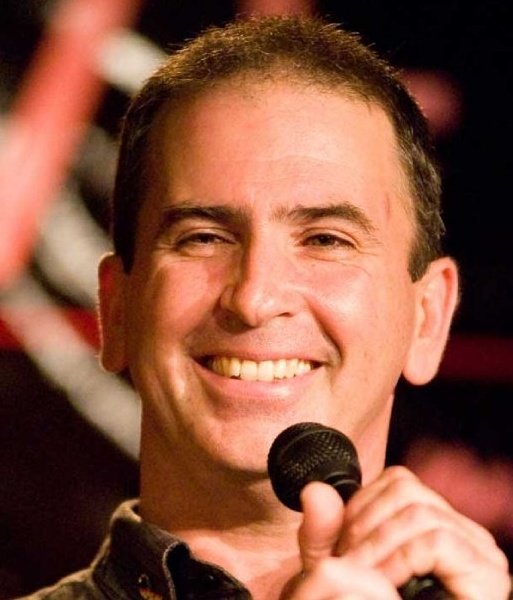 Tom Acousti
Send questions/comments to the editors.
