



Racing a frozen track facedown on a sled at speeds exceeding 80 mph doesn’t seem to faze 23-year-old Sherri Emery of New Gloucester. Having the money to pay for the expenses related to her chosen sport of skeleton, her living costs, and paying off college debt is what worries her.
“Nothing is worse than going to a race in, let’s say, Germany or competing in U.S. speed trials, and wondering how I’m going to pay for it and how I’m going to pay for what comes next. Since I’m not prepared financially, it causes an extra bout of anxiety,” she said.
Stepping back a few years, Emery developed a desire to compete in the Olympics upon watching the 2006 Torino Games while a student at Gray-New Gloucester High School.
The sport of skeleton held a particular fascination for her.
With the Olympics still on her mind, she visited the U.S. Olympic Training Center in Lake Placid, N.Y., with her family in 2007. The indelible impression created in her mind changed the course of her life.
After graduating from high school in 2008, instead of going to the University of Maine as planned, she enrolled in Skeleton Recruitment Camp, near Lake Placid. She started competing in races during the 2008-09 season, and integrated college courses at State University of New York at Plattsburgh into her schedule.
In the 2009-10 season, she added the U.S. National Championships to her campaign, then competed in two Junior World Championships in Austria during the 2011-12 season.
A year later, she raced on two developmental circuits, Europa Cup and North American Cup, taking her to venues in France, Austria and Germany.
Emery compares skeleton to luge, because it is a similar sport with which most people are familiar.
She explains the primary difference: “With luge, the athletes slide on their backs, feet-first. But skeleton is the opposite. Athletes go head first, riding on their stomachs. Their chins are about 2 inches above the ice, sometimes at speeds above 80 mph, depending on the track.”
Emery’s training regimen consists of working out six days a week, one to two hours each day. The content varies. Mondays, Wednesdays and Fridays may be weightlifting, while Tuesdays, Thursdays and Saturdays may entail sprint cardio exercises.
When her 10-year-old sled needed repair, she didn’t have the money to buy a new one, projected to cost in the $6,000-$10,000 range. The father of one of Emery’s friends, Phil Bolduc, vice president of production at Neokraft Signs in Lewiston, plus others with the company, fixed up her aging sled. Additionally, Bolduc built her a practice sled.
Being aware that this fix is just a stop-gap measure, the necessity of fundraising hit home.
She simply doesn’t have the time to work enough hours to pay for all of her expenses, not to mention paying off her college debt. She estimated that skeleton-related costs equal the amount she would earn from working a full-time job, leaving no time for training and competing.
Working part time at Goody’s Pizzeria in Gray, she is grateful for the flexibility that the owner accords her in accommodating her training regimen and travel.
Her wages, plus financial assistance from family members, help the cause, but come up short on meeting expenses.
She is trying to raise $20,000 this season to defray her skeleton expenses, but is only at about one-fourth of her goal so far.
“It isn’t really what I was hoping for, but at the same time it pays for the beginning of my season. I may not be able to buy new equipment right now, but at least I can pay for the most important races,” she said. “Just like anybody else who has to deal with financial struggles, you have to choose this, and sacrifice that.”
Her desire to improve in the sport is ever increasing.
“At first I said that I want to compete, and I want to do well. ‘Well’ isn’t good enough anymore. I really want to start winning because I’m tired of coming in second and third, and sixth and eighth,” she said. “At first it was about getting better, now I want to see it pay off. If I’m not good enough to win, then I’m going to find out how to get good enough to win,”
She identified the two major challenges she is facing – attaining elite-athlete echelon status and obtaining adequate financial resources. The 2014 Winter Olympics in Russia are admittedly out of reach for Emery, but she has her sights set on 2018 and beyond.
To read more about Emery, visit http://sherriemery.com.
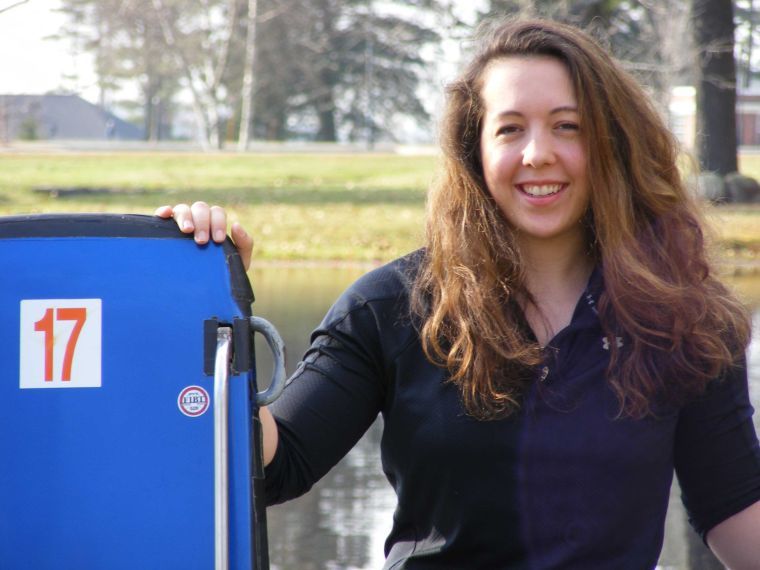 With an eye toward the 2018 Olympics, Sherri Emery of New Gloucester is attempting to compete at top levels in the sport of skeleton.
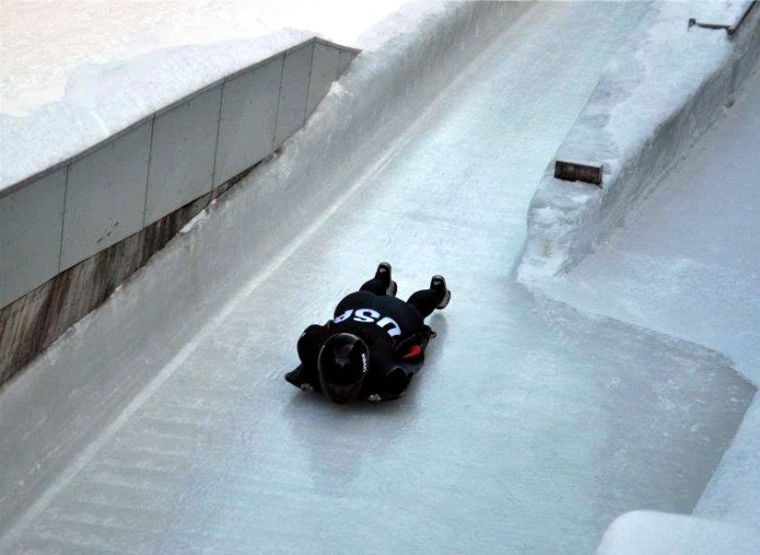 2008 Gray-New Gloucester graduate Sherri Emery races down the Igls bobsled track in Austria during a Junior World Championship skeleton competition during the 2011-12 season.
Send questions/comments to the editors.
