



SOUTH PORTLAND – Although there is only one incumbent and one former member among this year’s crop of candidates for South Portland City Council, there’s not one rookie in the field. All four candidates for two at-large seats have deep roots in public service, including time served on South Portland’s school board and its Planning Board, as well as a host of other municipal and civic committees.
Because South Portland puts up both at-large seats on the City Council in the same year, the top two vote getters will each win a three-year term. Voters can rest assured that those who get the nod will be familiar with the workings of City Hall.
Carol Thorne, 66, of Sandy Hill Road served 15 years on the Planning Board, from 1996 to 2011. More recently, she sat on the blue-ribbon commission convened in the wake of last year’s protracted debate over health insurance benefits, to recommend compensation rates for elected and appointed officials in South Portland. A Texas native, the long-time and “soon to be retired” real estate agent has called South Portland home, off and on, since 1967.
Boothby Road resident and South Portland native Richard Matthews, 47, sits on the school board, where he is in his second term. A self-proclaimed stay-at-home dad, with “the greatest job in the world,” the Coast Guard veteran and father of three also volunteers for a host of youth and senior services across the city. He also sits as co-president of the Mahoney Middle School Parent-Teacher Association.
Maxine Beecher, 70, of Highland Avenue has previously served one term on the school board, and three on the City Council, ending last fall when she was forced out by term limits. Credited as a driving force behind the creation of South Portland’s new comprehensive plan during her final term, Beecher was active earlier this year in the campaign to keep alcohol out of Bug Light Park during the inaugural Buy Local festival.
Finally, Mayor Tom Blake, 62, who lives on High Street, is coming off his second term on the council. A retired city firefighter/paramedic who now teaches a class on Maine history at Southern Maine Community College, Blake is a founder and former president of both the Ferry Village Neighborhood Association and the South Portland Land Trust.
Blake, alone among his fellow candidates, supports the controversial Waterfront Protection Ordinance, a citizen-initiated referendum question also on the Nov. 5 ballot, which aims to keep diluted bitumen, or “tar sands,” out of South Portland.
Tar sands
“I suspected that may come up,” said Blake, drawing a laugh when asked about the zoning proposal during an Oct. 24 candidates debate at City Hall, sponsored by the South Portland-Cape Elizabeth Community Chamber. Blake has been a leading, vocal proponent of restricting new oil industry development along the waterfront.
“People are not saying go away, but, please, for the health and safety of our community, do not bring any more dirty petroleum into our city,” said Blake. “Tar sands is the worst [fuel] on earth. This is a health and safety issue and this is the only tool in our community that can stop this product.”
Blake predicted that if the WPO does not pass, property values would drop across South Portland based on a lingering possibility that Portland Pipe Line could seek to import tar sands into the city from Montreal, for shipment around the globe.
Matthews, Thorne and Beecher also raised concern about the possibility of tar sands flowing though South Portland. None were particularly keen on the idea. However, all three, including Matthews, who gave his position publicly for the first time at the Oct. 24 debate, decried the proposed zoning change as an overextension fraught with unintended consequences.
“I do not want tar sands or a bad environment for South Portland,” said Matthews.
However, citing conflicting interpretations of what may or may not result from how the ordinance is worded, Matthews said he could not support passage of the document.
“I believe that if an ordinance is this confusing and hard to understand before it passes, it can only get worse,” he said. “So, I will be voting, ‘No,’ for the ordinance and will immediately work toward a better ordinance that will benefit both businesses and especially the environment.”
“I will be voting, ‘No,’ on the WPO, which is, I feel, a very, very poorly written ordinance,” said Thorne. “It is a terribly written ordinance. It has no structure.”
Like Matthews, Thorne said that if the WPO is rejected, she supports creation of a committee comprised of “planning and development staff, citizens and stakeholders,” to draft “an explicit, workable ordinance.”
Beecher said she is “opposed to tar sands” but “at the same time I cannot support this WPO ordinance because, when every person you talk to has a different interpretation of what the words mean, and every lawyer has a different way to express what it means, then it means it’s not clear.”
Predicting a bevy of lawsuits regardless of the vote tally Nov. 5, Beecher said “the very first thing” she would do, if elected, would be to move for a moratorium on any development that would allow the movement of tar sands into South Portland, “until we have a chance to actually look at, work on, and develop something that will work.”
Beecher, who recently won state and regional planning awards for work on South Portland’s comprehensive plan during her tenure on the City Council, said she agreed with the majority of the planning board that deemed the WPO to be “not consistent” with the goals set forth in the city-wide vision.
Healing hands
Asked by chamber board member Mike Vaillancourt how they might heal the divide created in South Portland stemming from the tar sands fight, all four candidates lamented a certain loss of civility in the city since this past summer, but few offered specific fixes.
“Whether it passes or not, we need to approach each side and unite,” said Matthews. “This should never have gone this far. I don’t want to wake up wondering how many people are not going to be friends anymore. I live and breathe South Portland, and it kills me to see this happening.”
Matthews concluded by saying, “I just want this to go away,” but later offered his apology for that comment.
“It’s not going to go away,” he said. “In a happy, fairy world it would, but that’s not going to happen. Peter Pan has to grow up.”
Thorne said the best chance at a de?tente is to defeat the ordinance and work toward a better version. If the WPO passes, she said, it could be amended only by another citizen referendum, which promises to be at least as tough a slog as the effort currently under way. Comparing the current imbroglio to the fight over cellphone towers waged during her time on the Planning Board, Thorne said she would work as a councilor to shepherd through a similar, but better ordinance.
“It has to be clear. It has to be explicit,” she said.
Meanwhile, Beecher seemed less concerned with the work product of the council than with the tone of discourse moving forward.
“I am really concerned about the divisiveness this has caused,” she said. “We have neighbors not talking to neighbors, and that’s not how South Portland usually works. I see my role as a councilor, if I should get elected, is to somehow bring this community back together.”
Beecher also called for a moratorium on waterfront development, if the WPO does get voted down, while the City Council crafts a refined version.
“Let’s not let anything happen while we’re working on something,” she said.
Blake, however, was unrepentant of his position.
“I’m very disappointed that I continue to hear from candidates and current councilors that we are facing lawsuits, lawsuits, lawsuits,” he said. “That’s a scare tactic. We have an ordinance before us that I believe is good, that I believe we can work with, with a positive attitude.”
Blake pointed out that an effort to ban tar sands cannot be as explicit as Thorne wants, because a municipality cannot control international trade. Moreover, he said, there is little point in calling all sides to the table to discuss the product.
“There is no compromise on this issue. The petroleum industry will not compromise,” he said. “The biggest problem that we have is that the big, long, powerful, rich arm of the petroleum industry has gotten into the community, has torn us apart, has misrepresented our community. They are filling our community with misinterpretations [of the WPO], and I do not believe them.
“This is our only chance to hope to stop tar sands in this community,” said Blake. “I am convinced that no jobs will be lost and no businesses will be closed. Just the opposite. If we do not pass the WPO, people will not want to come here.”
Public services complex
All four candidates support the $14 million bond proposal on the Nov. 5 ballot to erect a new building off Highland Avenue to house the public works, transportation and parks departments.
Beecher is active in the citizens group supporting the borrowing package with red and green signs posted throughout the city. “We have a chance to improve the city,” she said, citing as her “major goal … a safe place for employees to work.”
“Now, we don’t have lifts in the public works facility that allows big trucks and big buses to be lifted up so people can work safely under them,” said Beecher. “Right now, they’re on their knees, or on their backs.”
Like Beecher, Blake said the new 56,100-square-foot building will save the city money in the long run, given that it will be built to green-energy standards.
“This is a case where I think we need to spend money to make money,” he said. “It’s an investment. The entire [current] complex is outdated, antiquated and unsafe. We have unhappy workers, and five heating systems that are burning a lot of fuel.”
Blake also said the Highland Avenue site is more centrally located than the public works garage on O’Neil Street, which may be redeveloped for new homes.
Matthews said he made up his mind during a recent tour of the O’Neil Street complex, which dates to the 1930s.
“What I saw caught me off guard,” he said. “I did not realize the public works facility was in as bad a shape as it is. I think it’s time that our community stepped up. It’s the time to move forward. It’s the responsible thing to do.”
Thorne acknowledged “a great deal of reservation,” when she first heard about the $14 million price tag for the new building, which will cost an addition $6 million in interest over 20 years.
“I did not really feel comfortable taking on that much more debt for our city,” she said.
However, like Matthews, Thorn said she was swayed following a recent open-house tour.
“I knew our facility was in bad shape, but I had no idea it was as bad as it is,” she said. “I am now in strong favor of this bond.”
School relations
Asked how they might approach the annual budgeting process, given the sometimes-contentious relationship with the school board, each candidate preached conciliation, while steering clear of hard numbers.
Citing her inexperience working with school budgets, Thorne took a wide berth around the topic in general.
“This is an area in which I will be working really, really hard to educate myself,” she said.
Beecher, meanwhile, said there is not as much conflict between the school board and the City Council as sometimes supposed.
“I don’t see it as being a bad situation,” she said. “We’re all people concerned about one thing––a great city, and that includes great schools.”
Blake said relations have improved, but that it is inevitable the council and the school board will butt heads.
“There is automatic conflict because of the nature of the two jobs,” he said. “What is important is that the two sides continue to work together to make the process as smooth as possible.”
“It is an extremely difficult budget to read,” said Matthews, following up on Blake’s comment that school spending amounts to 65 percent of the city budget. “It’s one of the toughest budgets to trim.”
Instead, Matthews said that, given his current position, he could work as a bridge between the school board and the City Council, helping to further cement a relationship that, he said, has been improving in recent years.
Historic preservation
Given the recent listing of South Portland as a “place in peril” by Greater Portland Landmarks, which said the city is in danger of losing its historic character to unregulated development, each candidate preached some form of intervention.
Beecher, for her part, said the first step is to seek out a guiding hand.
“It is time for the city to step up. We haven’t been doing a very good job,” she said. “But we need some historic agency to come forward. They’re the experts. The council needs to know what we need to do to preserve things.”
Blake said he already has asked the council to make historic preservation the topic of a future workshop.
“Really, what we need to do is to educate our community, and inventory what we have,” he said.
Matthews said that he would reach out to local historians in hopes that historic preservation might pave the way to future development.
“The shipyard was a booming area back in the day, and now it’s just a whole lot of empty land,” he said. “Maybe somebody can get something going down there that is good for the city.”
“I find this extremely exciting,” said Thorne of the preservation talk since the Greater Portland Landmarks’ listing. “I think it’s extremely important, and it needs to move forward.”
Priorities
Asked to cite their “No. 1 priority” if elected to the council, each candidate returned to the tar sands question.
“We really need to heal this process,” said Blake of the public rift the question has caused. “It saddens me to see what has happened to our community. This has been a serious, serious disruption. We need to sit down, all sides, and have a serious dialogue about how we are going to meld back together and work together in the future.”
Beyond that, Blake said, the usual question predominates regarding how to provide services people need at a price they can afford.
“We need to find ways of doing more with less,” he said. “It’s a tough time in American society.”
“I want to reach out to everybody and, if I have to bring your hands together to unite you, I’m going to do that,” said Matthews of the need to overcome the tar-sands divide.
Ultimately, he said, South Portland cannot thrive by hobbling business development.
“We need to revitalize areas of South Portland,” said Matthews. “We need to expand our tax base. If it means redeveloping down in the shipyard area, let’s do it.
“To expand our tax base, we need to get neighborhoods excited,” said Matthews. “We need to get people excited. As a city councilor, that’s my job.”
Thorne said her top priority “is to bring our city back together.” Following that, she said, her primary goal will be to implement the vision of the city’s new comprehensive plan.
“We have a great plan,” she said. “We really need to work on bringing it alive.
“We also need to bring in strong businesses and keep the businesses we have,” she said. “We need to preserve what we have good, and we need to create what we need more of.”
“Bottom line is, we need to come together as a community,” said Beecher. “My priority, whether I’m elected or not elected, is to try and do what I can to help begin the healing process.”
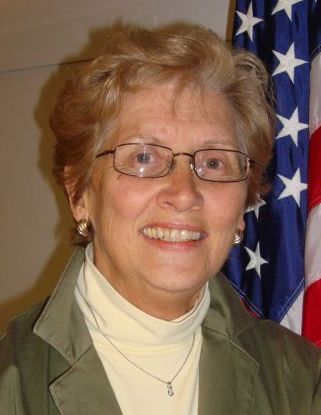 Maxine Beecher
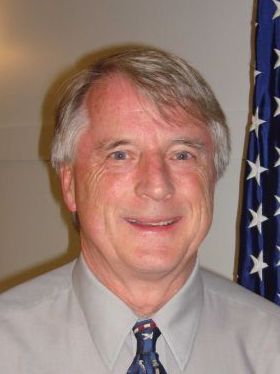 Tom Blake
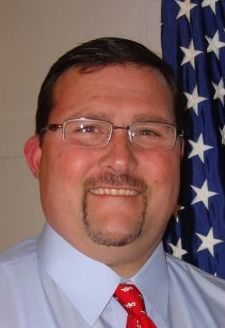 Richard Matthews
 Carole Thorne
Send questions/comments to the editors.
