



The other coast
Bob DeLoss narrated “Pacific Coast, Top to Bottom,” his travelogue from Vancouver to San Diego, for members of the Maine Charitable Mechanics Association, March 10.
Vancouver has mild climate all year. It also has North America’s second-biggest Chinatown, next to San Francisco. A swinging footbridge 450 feet long spans a 1,000-foot deep gorge over a nearby river.
Butchart Gardens, the big tourist attraction on Vancouver Island, was started by a well-off couple that covered a former limestone quarry with flower plantings, now extensive and beautiful.
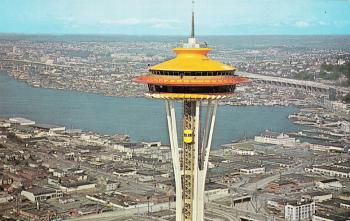
A brief look at Seattle took us to the Space Needle, relic of the 1962 World’s Fair, with views to the Cascades and Mount Rainier on a clear day. Then, a little coastal rain forest on the way to Portland, Oregon, named for his hometown, Portland, Maine, by early resident Francis Pettigrew, who won a coin toss over “Boston”.
It’s the Rose City, and we saw a test garden of roses, rhododendrons and azaleas. It’s also home to Pendleton Woolens, and has a thriving outdoor market.
Plus, Portland has more draft beer breweries than anywhere else in the world, 32 in the city and 38 more in the area.
Mount Hood, dormant volcano, has a ski lodge on it that makes it North America’s only year-round-ski area. We saw a 1,694-foot waterfall tumbling down the wall of the gorge of the Columbia River, and visited a replica of Fort Clatsop, where Lewis and Clark camped in 1805-06, making 14 bushels of salt for their return voyage.
We saw the so-called “haystack” rock formations on the Oregon coast, tall dark haystack shapes, standing alone and in clusters, surrounded by flat sand beaches. People beach comb, looking for agates, and some dig clams. At Yakima Head, near Newport, we saw sea lion bulls. At Dunes City, open tourist dune buggies explore the blowing dunes, up to 450 feet high.
We took a low-draft hydro-jet boat up the Rogue River, carrying tourists and delivering mail – there’s a logging road, but the boat is faster. Fishermen catch salmon, ospreys and bald eagles catch what they don’t, and others frolic in play. In Redwood National Park we saw the big trees, some 370 feet high and weighing 500 tons. A tree had a tunnel through it; no driving your car through any more, he said.
In California’s Napa Valley, we saw wineries, Beringer and the Christian Brothers, with a few ancient wine presses but mostly modern stainless steel tanks, and fields of grapes. In San Francisco we saw the Golden Gate Bridge, with a helicopter flying beneath it, and the 1905 Gallery of Fine Arts, outdoor colonnades and statues around pools, like a Roman villa.
At the end of the cable car line we watched a motorman hand-turning the car on an old fashioned turntable.
At San Simeon we saw Hearst Castle, presented to the state as a museum after William Randolph Hearst’s death. It has 100 elegant rooms, and Hearst never considered it finished.
We saw the Spanish Day parade in Santa Barbara, costumes and horsemen. The city was founded as a Spanish fort in 1783, and its mission church soon followed in 1786.
At Simi Valley, to the Ronald Reagan Library, where he is buried with a view down the valley to the Pacific. Inside a building is a Boeing 707, Air Force 1 in Reagan’s day, and also a helicopter, and a complete motorcade including Reagan’s own limo.
In Los Angeles we saw Grauman’s Chinese Theatre with its Walk of Stars, movie and network headquarters, and the LaBrea Tar Pits museum, which has relics of saber tooth tigers, wolves and mammoths.
At San Juan Capistrano, the mission was founded in 1776 by Brother Junipero Serra. Its great church, completed in 1806, was destroyed 50 years later by an earthquake.
San Diego, the oldest West Coast city, is a big aerospace center and also home to the U.S. Pacific Fleet. It still has a fishing fleet, and fishermen patching nets. And it has the spectacular Sea World Aquarium, with its shows of trained killer whales, pilot whales and dolphins, leaping in unison over jets of water.
The next lecture, held in the auditorium of Catherine McAuley High School on Forest Avenue, Portland, will be at 7:30 p.m. March 31, with a film on Fiji. Non-members are invited to come for free to see if they’d like to join.
The Shaker inspiration
The Shaker influence on furniture was the topic of a talk by Chris Becksvoot, furniture maker, March 10 for members of the Antiques Study Group of the Woman’s Literary Union. He lives in New Gloucester, is closely associated with the Shakers, and does all the repair work at the Shaker Museum, located at Sabbathday Lake, Route 26, New Gloucester.
His father was a furniture maker, born in Germany.
Chris works alone and designs, lays out, glues, sands and constructs all his furniture pieces.
He brought a few small models of his furniture to display to us. He told us that much of his work is inspired by the work of the Shakers. Among his furniture pieces, many are made of cherry wood. He also plants between 20 and 50 trees a year, or between two and four times the number of trees he uses. Included are white pine, hemlock, balsam fir and sugar maple.
His work is simple and elegant, and he is a purist in many things. Though he uses some power tools, he lays out his dovetails by hand and cuts them by hand instead of using template and router. He uses cherry throughout, even on drawer parts and dividers. For a finish, he uses an edible grade of boiled linseed oil, without metallic driers. He designs his own catalog and has its text printed in old-fashioned letterpress, with color photos by another printer, in offset. His business card is printed on wood cherry veneer laminated so it won’t split.
He makes a broad range of Shaker-style pieces, as well as modern-style lamps, candleholders and other items, plus custom work. He makes only 30 to 40 pieces a year. Prices are not low; the most reasonably priced item he sells is a book he wrote, “The Shaker Legacy,” including photos of 1,450 pieces of Shaker work.
Among his furniture pieces are slant-top desks, tables, 15-drawer chests, music stands, Shaker tall clocks, pencil-post beds and innumerable other beautiful pieces. If you’d like to stop by his shop and showroom in New Gloucester, call for an appointment, 926-4608.
Chris Becksvoort is a very talented furniture maker and our study group was privileged to hear him.
The seafood casserole
Today’s recipe is another seafood recipe, from “All-Maine Seafood Cookbook,” 1976. It was submitted by Mrs. Lucille Ray, Auburn. A poem on the front page of this cookbook will interest you:
“Good cooks are born, not made, they say.
The saying is untrue.
Hard trying and these recipes
Will make a good cook of you”
ESCALLOPED SCALLOPS
1 pint scallops
1/2 cup butter
Salt and pepper to taste
1 cup salted cracker crumbs
2/3 cup cream “or top milk.”
Melt the butter, add salt, pepper and cracker crumbs and mix well. Put in layers with the scallops in buttered casserole. Pour cream over the top and bake at 350 degrees about 25 minutes.
 Ramblings
Send questions/comments to the editors.
