



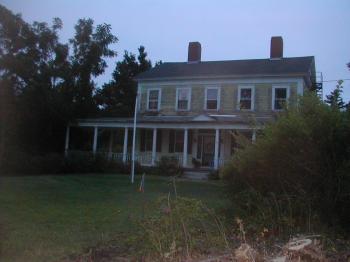
The 23-room house and property on Fort Hill Road in Gorham has weathered more than two centuries. Now known as Dragonfly Farm, its fate is in the hands of Peter and Debe Loughlin, who are pouring their hearts into preserving the historic home and a way of life.
The house was built about 1774 by Capt. Alexander McLellan, a Revolutionary soldier who died during the war. Later known as the estate of a prominent Boston attorney, Isaac Dyer, the home is a registered federal landmark.
Twenty-five years ago, Peter Loughlin bought the property, located near the campus of the University of Southern Maine, from Gwen Sawtelle. She was the widow of Ken Sawtelle, a lifelong Gorham resident and well-known Gorham businessman.
At the time, he said, an annoying infestation of mosquitoes came with the deal. “There were so many mosquitoes you couldn’t go out at night,” he said.
So he bought dragon-fly larvae, which hatched and attacked the mosquito population. Hence, the farm derived its current name. Dragon flies still buzz through the gardens. “You just learn to duck,” Loughlin said.
After death of her husband, Sawtelle rented the property to a fraternity at the university. When Loughlin became the frat’s new landlord, he popped in one day unannounced, an act that might have saved the house and lives.
He spotted kegs of beer and frat brothers getting ready for an indoor party. One was trying to fire up a barbecue. “Is that gasoline?” asked Loughlin, sniffing the fumes of a nearby can. Loughlin’s intervention avoided the unintended conflagration.
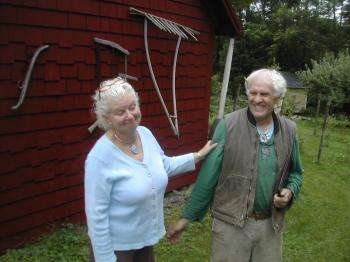
Now live-in landlords, the Loughlins rent some of the home’s rooms to art, music and theater students at the university. The couple occupies the first floor.
Debe Loughlin works in the art department at the university as had, coincidently, Gwen Sawtelle. Her husband stays busy restoring lawns and gardens that surround the home. He raises their own vegetables.
“He works 24 hours a day,” Debe said.
She pickles, cans and freezes the produce he raises for their table, plus they grow three kinds of grapes on trellises.
“We’re almost self-sufficient here,” she said.
Dragonfly Farm has 10 hives of bees that produce honey. Besides what they use, the couple markets honey under the Dragonfly Farm label – designed by Debe. Bees in each hive produce a pound of honey a day from May through September.
Peter converted an old chicken coop for his wife’s art studio. “We reuse, redesign a lot of the things already here,” she said.
She shares her talents and teaches friends how to press fruit into juices and other nearly lost arts like soap making – “back-to-living skills,” she calls them.
Inside their home, Debe painted their library walls with a mural depicting various historic sites in Gorham. Using an old recipe, she mixed pigments with egg yolks in formulating the paints. The mural took six months. The interior of the home is well preserved and looks much the way it did in the 1800s.
Wallpaper in the dining room dates to the days of the Dyers. But the wallpaper needed cleaning after the frat left. “We got rid of the beer stains,” he laughed.
Soon after buying the farm, he added a historic three-story barn, which was once stood at the intersection of Main Street and New Portland Road in Gorham Village. He moved the barn to the farm and now uses it for a shop.
Working on the grounds, he’s been busy replanting trees. Many of the old ones were destroyed or damaged during the ice storm of 1998. Then a high wind took more toll a few years later. “It took us years to clean up and then this wind hit,” she said.
They lost 147 trees, including a maple that an expert estimated to be the oldest in Gorham. “The pond was covered with trees,” Peter said, describing the strewn damage.
But he salvaged lumber from the damage and hired a man with a portable sawmill to set up at the farm to saw logs hauled out with a skidder. He sold 16,000 board feet of lumber and kept 10,000 feet, including 1,000 feet of black walnut, for their own purposes.
Some of the downed trees were cut into firewood. There are two stoves in the home, where she cooks using herbs and old recipes.
With the lawns, flowers, shrubs, trees and a pond on Tannery Brook, the Loughlins see the potential of their property as ideal site for weddings. “It would be beautiful for the bride and groom to walk through the grape vines to get married,” she said.
She described the setting as serene and quiet, although located on a busy highway. “We had our reception here,” she recalled about their own wedding in 1996.
But a wedding venture is a ways off.
“I could do a small one here tomorrow, but I want to do it right,” she said.
 Cutline (Dragonfly #1, 2, 3 or 4)
  Cutline (Dragonfly #6)
  Cutline (Dragonfly #7)
  In the thrall of a Gorham classic
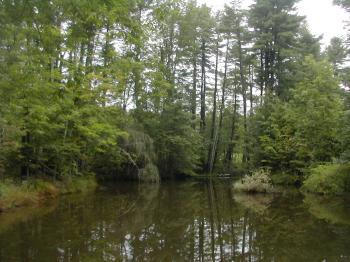
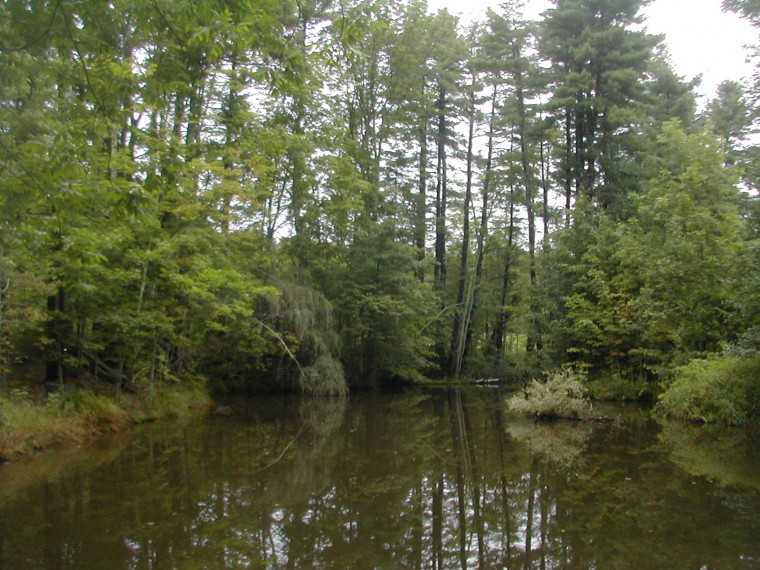 Cutline (Dragon Fly 5) – This pond at Dragonfly Farm is part of Tannery Brook. The pond was once stocked with trout and the pond is a favorite spot for waterfowl.
Send questions/comments to the editors.
